


Russia Welder Jobs 2026: High Salary Contract Work for Foreigners
Work as a welder in SVO for up to 1,000,000 rubles a month
Work as a welder in SVO for up to 1,000,000 rubles a month.
In SVO, they need welders just as much as they need engineers, gunners, and doctors. Equipment is always being disabled by fighting; armor is being punctured, bridges are falling apart, and bunkers need to be reinforced. So, being a blacksmith in SVO isn't just fixing things; it's also a daily part of making things ready for battle. We talk about why a repair squad needs a welder, how much he gets paid, what he does, and how to sign a contract.
Charges
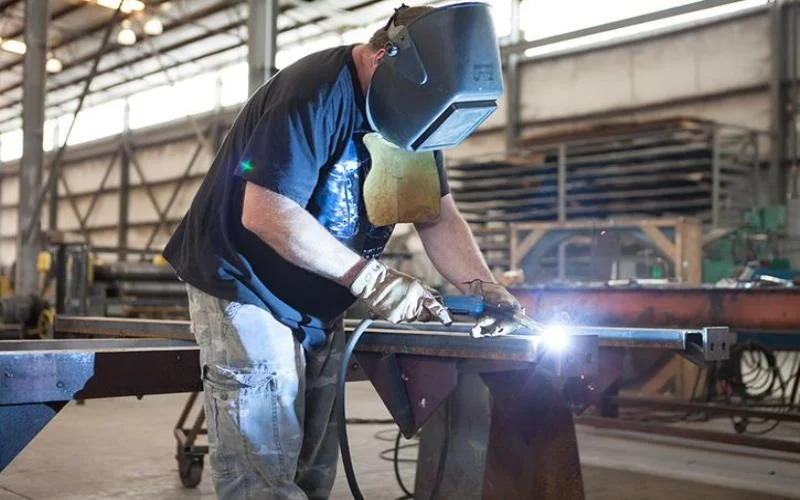
In SVO, a welder is an expert in an engineering team. It is directly their job to make sure that tools can continue to be used in battle. There is no ease for him in the studio; the job can come at any time and has to be done outside, on temporary sites, in the heat. These are the guys who repair protected automobiles when they need to be mended fast.
Military equipment fails rapidly, fasteners fall out, and the systems flex from impact or stress. If a car stays on the neutral strip, it needs to be emptied, checked for damage, holes repaired, and parts replaced. All of this in just a few hours. This is why there is a repair squad with welders: to do this.
In SVO, what does a welder do?
There is a long list of things that welders will do in SVO. Most of the time, a welder:
Fills in holes, cracks, and chips in the metal of army trucks, tanks, IFVs, and APCs.
fixes parts of the chassis, support systems, frames, bolts, and armor screen mounts.
Fixes up technical buildings like bunkers, shelters, temporary bridges, and fire points.
It can be used for hand arc, semi-automatic, and gas welding.
takes care of and uses field posts, engines, hand tools, and safety gear.
Helps move equipment away from the front lines and is present during inspections and repairs on the scene.
Makes temporary buildings like mortar supports, work tables, and disguise frames.
It helps build and improve defense structures at places where troops are stationed.
A military blacksmith does more than just join pieces of metal together. He does full-on repair work, which means he has to make choices, work quickly, and even deal with shooting. You need to be able to stay accurate under pressure and know why you are needed and what counts on you to do this job.
What You Need
A few simple things must be true in order to sign a deal with the Russian Federation's Ministry of Defense. Some soldiers already have experience, while others are trained with help from the Ministry of Defense. This is what you need to do:
Naturalization in the Russian Federation (foreigners are also considered if they want to do temporary work).
Age range: 18 to 55 years old (or 64 years old if the panel decides).
From the ninth grade on, education.
If you are in good health (type A or B), you will have to be able to work in tough circumstances.
There were no judgments for major writings.
Basic welding skills are nice to have, but not necessary.
They'll take you in whether you've been in the army or not. All applicants have to go through a medical panel, professional selection, and, if needed, faster training.
Pros of hiring a contractor
Working as a welder on contract for SVO gives you more than just a job. Because the promises are written in laws and official orders, this is a stable and safe way to make a living. During and after shift, a contract soldier gets certain perks, such as:
a steady income. Regularly and on time, salaries are paid through state funds.
Signing gifts that are pretty big. Once the agreement is signed, a one-time payment of up to 3,000,000 rubles is needed, which depends on the area, the length of the service, and any other conditions.
Housing answer. The contract soldier can get a military mortgage, and the state helps them get a home loan with very little extra payment.
Doing everything that needs to be done at the cost of the army. The price includes a place to stay, an outfit, warm clothes, tools, food, and medical care. Transportation and moving to the job site are coordinated from one place.
Status in society and the law. Once the first contract is over, the title of veteran of military activities is given. This has extra benefits, like lower taxes, better medicine, better schools, easier entry to college for kids, and so on.
Possible jobs after service. There are a lot of private jobs available for people who used to be experts in the military. Welders with experience in the field are highly respected because they can work alone, make choices, and finish a lot of work quickly.
A chance to stay in the system. You can move to training units, back units, repair companies, or fixed workplaces if you want to. The amount of work is cut down, experience is kept, and social benefits are kept.
Insurance promises you can count on. Contract troops are fully covered, so if they get hurt or hurt in some other way, they will get paid, get care, and get back to normal.
These are not just vague promises; thousands of military experts in the Russian army have already taken advantage of this set of chances. As of 2025, contract work is still one of the safest ways to make a living because you are promised pay, a place to live, and job opportunities.
Payments
Government laws, presidential decisions, and Ministry of Defense orders set the rates at which welders who sign contracts with the Russian Armed Forces are paid. The monetary budget includes the base income, bonuses, pay for work conditions, and insurance payments for accidents or other reasons.
Welder pay in SVO: Welders in SVO make around 210,000 rubles a month. Pay can go up to 350,000 rubles if you have a lot of work to do, a lot of experience, do military work, or work in a forward zone. This is a monthly payment that doesn't depend on bonuses or other pay.
Prizes
A contract worker can also expect the following:
Welders get up to 3,000,000 rubles when they sign the contract. They also get paid for working in fires, evacuating, and fixing broken equipment. They get paid for injuries and trauma, are paid when they are fired because of their health, and the government helps their family if a soldier dies in battle.
Money amounts are not part of a salary and are not normally thought of as income. These are different promises meant to protect the worker and his family.
More money being paid
If a soldier gets hurt in the SVO zone, the amount of money they get relies on how bad their injury is, how disabled they are, and how it affects their ability to serve:
Presidential lump-sum payment (Decree No. 98 of March 5, 2022, as changed by Decree No.968 of November 14, 2024):
3 million rubles for a serious injury, 1 million rubles for a minor injury, 100,000 rubles for all other cases, and 4 million rubles if the injury made the person unable to work.
The payment of insurance under Federal Law No. 52 of March 28.1998:
343,956 rubles for a serious accident and 85,989 rubles for a minor one.
Payment in one lump sum when disability is assigned (Federal Law No. 52):
Group I costs 2,579,672 rubles. Group II costs 1,719,781 rubles. Group III costs 859,890 rubles.
The following monthly sums will be paid to those who are incapacitated and injured under Federal Law No. 306 of November 7, 2011:
The cost of group I is 24,076 rubles, the cost of group II is 12,038 rubles and the cost of group III is 4,815 rubles.
According to Federal Law No. 306, if you are dismissed due of a military accident, you will be paid a lump amount of 3,439,562 rubles.
If a service member dies in SVO, his or her family might get a variety of various compensation. Law No. 306-FZ provides for a lump-sum payout of 5,159,344 rubles in 2026. This is when the Ministry of Defense pays out roughly 3,270,000 rubles via "SOGAZ". Also provided is a payout from the president in the amount of 5,000,000 rubles. More on payments in the article.
If the soldier is wounded in the SVO zone, the amount of money depends on the severity of the wound, the degree of disability and how this affects the capacity to serve:
Presidential lump-sum payment (Decree No. 98 of 5 March 2022, as amended by Decree No. 968 of 14 November 2024):
3 million rubles for a major injury, 1 million rubles for a mild injury, 100,000 rubles for all other instances, and 4 million rubles if the damage rendered the individual unable to work.
Payment for insurance under Federal Law No. 52 of March 28, 1998:
343,956 rubles for a serious accident and 85,989 rubles for a minor one.
Payment in one lump sum when disability is assigned (Federal Law No. 52):
Group I costs 2,579,672 rubles, Group II costs 1,719,781 rubles, and Group III costs 859,890 rubles. People who have been hurt and are disabled under Federal Law No. 306 of November 7, 2011, will get the following amounts every month:
Group I costs 24,076 rubles, Group II costs 12,038 rubles, and Group III costs 4,815 rubles.
Federal Law No. 306 says that if you are fired because of a military accident, you will get a lump sum payment of 3,439,562 rubles.
If a service member dies in SVO, his or her family gets a number of different payouts. Law No. 306-FZ gives a lump-sum payment of 5,159,344 rubles in 2025. This is when the insurance company "SOGAZ" gives out about 3,270,000 rubles through the Ministry of Defense. A payment from the president in the amount of 5,000,000 rubles is also given. There are more specifics in the piece about payments.
Goods and services for everyone
Working under a contract in the SVO zone not only gives you a steady income, but it also protects your social rights in the long run. When a Russian serviceman signs the contract, he or she becomes an official Russian citizen and can use a list of state programs to help themselves and their families. These things will always be true for contract soldiers:
Veteran of combat operations rank is given to people who have served in SVO. It helps with taxes, health care, jobs, and homes.
Free medical care in both military and private settings, including care for wounds sustained while serving. All battle pay, bonuses, and other forms of benefits are not subject to personal income tax (NDFL). As a demobilized soldier, you have the right to free professional training and education.
Loss of obligations: debts like taxes, loans, and fines are put on hold while the service is going on.
After the contract is over, admission to universities without competition (goal limit).
Families of welders who signed a contract are also entitled to benefits under current law:
Payments and allowances: child support, help if the main worker dies, and social payments to the wives of contract soldiers.
Guarantees for workers include keeping their jobs, being able to work from home, and having open hours. Transportation perks, like free rides to rest stops, sanatoriums, and new homes.
The attacker, including the injured, and his family members should be able to get medicine and care at a hospital or vacation.
help with getting kids into kindergartens, schools, and colleges, as well as help with getting into college.
By taking these steps, the contract soldier's family can be sure that they will not be left without help while he is serving.
How do I become a welder in SVO?
In order to work as a welder at SVO, you have to go through the contract process. It is required of all trainees and military experts and has several steps:
Look for open positions. You can see what jobs are open right now on our website, https://e-immigration.ru/
Getting applications and documents ready. You will need a visa, TIN, SNILS, proof of schooling and work, and a military ID (if you have one). A request for a military medical commission (VVK) is also sent at the same time.
Screening for health issues and using specialists. The medical council decides what state of health someone is at. To work accurately the welder must see well, be able to cope with physical stress and have no long-term ailments. A skillful discussion follows the physical check.
Putting down the signature. After all the checks are done and found to be valid, a one-year contract is signed. This is when the contract soldier starts getting paid, getting tools, and getting all social promises.
Getting ready. If the applicant has never been in the military or had any special training, he has to take a short course at a Ministry of Defense training school. This includes learning how to do drills and use field tools.
Getting to the room. It's possible for the contract soldier to be sent to repair battalions, engineering-technical units, or supply detachments. When the trainee gets there, he or she is put with a group and starts working.
A lot of places that hire people give free food, housing, and transportation during the commission process. Military personnel are on site to help with handling documents.
Things Used
The full set of tools that the welder gets includes:
Protective gloves, warm underwear, and a uniform.
Helmet, body gear, mask, and a screen for welding.
Tool kit for the field.
A sleeping bag, a first-aid kit, a backpack, and a small home repair kit.
Questions people often ask
1. Does SVO need welders?
Yes. It is their job to help with technology issues at the front. Restoration can't happen, tools can't come back, and jobs can't be kept without them.
2. How much does an SVO welder make?
Every month, a mechanic makes about 210,000 rubles. With bonuses and extra payouts, the amount can go as high as 350,000 rubles.

We will arrange a meeting with a World Immigration Hub specialist for you in person or online format
During the meeting, the specialist will:
- Explain how we work and how we can help you.
- Explain the immigration process step-by-step, presenting the roadmap, budget, and financial requirements.
- Share our immigration experience and discuss key points you should know before starting your journey.
- Determine the next steps together with you.
Depending on the project’s complexity, the meeting with the manager may be coordinated with experts, designers, and assistants.

Natalia Kovalenko
Immigration Consultant

Mehman Asadzade
Immigration Lawyer